



If you have bought a 4K TV or a PlayStation 5 or a high-end graphics card you have probably heard of HDMI 2.1. For a time HDMI 2.0 was the best for home entertainment. It gave us pictures for watching Netflix or playing games on consoles.
Now technology is moving towards 8K resolutions and really fast 120Hz refresh rates. So people are talking about this.
The main question is: do you really need to replace all your cables or is HDMI 2.1 just something companies are saying to get you to buy more stuff for your specific setup? At Mowsil we want to help you make a setup that works well without spending money on things you do not need. Let us look at what HDMI 2.1 and HDMI 2.0 are and which HDMI cable is really good, for your home.
The Big Picture: It’s All About the "Pipe"
Think of an HDMI cable like a water pipe. The "bandwidth" is the diameter of that pipe.
HDMI 2.0 (Premium High Speed): This standard offers a bandwidth of 18 Gbps. It’s more than enough to carry a 4K signal at 60 frames per second (fps). For most people watching movies or playing last-gen games, this is the sweet spot.
HDMI 2.1 (Ultra High Speed): This is a massive leap, boosting bandwidth to 48 Gbps. That extra room allows for massive files—like 8K video or 4K video at 120fps—to flow from your device to your screen without being squeezed or slowed down.
Resolution and Refresh Rates: 4K vs. 8K
HDMI 2.1 is the way to go for the future. HDMI 2.0 is still okay, for living rooms it does what you need it to do.
If you are a gamer or someone who really loves music then HDMI 2.1 is something to think about. It is worth spending an extra money on like the cost of a few pizzas.
Setting up a home theater should be a thing to do. It should not be something that gets on your nerves.
When you choose a Mowsil Ultra High Speed HDMI 2.1 cable you do not have to worry about making a choice.
HDMI 2.1 handles 8K at 60Hz and even 10K resolutions for those who really want to live on the bleeding edge. More importantly for today's users, it enables 4K at 120Hz. This results in incredibly fluid motion that is highly noticeable in action movies and, more critically, competitive gaming.
Why Gamers Actually Need HDMI 2.1
If you own a PS5, Xbox Series X, or a high-end PC with a modern NVIDIA or AMD card, the cable you choose directly impacts your performance. HDMI 2.1 introduces several "Game-Changing" features that HDMI 2.0 simply can't handle:
1. Variable Refresh Rate (VRR)
Screen tearing happens when your console's frame rate doesn't match your TV's refresh rate. It looks like the image is being sliced in half for a split second. VRR fixes this by syncing the two in real-time. It makes gameplay feel buttery smooth, even when the action gets heavy and the frame rate dips.
2. Auto Low Latency Mode (ALLM)
Tired of digging through your TV settings to find "Game Mode" every time you turn on your console? ALLM does it for you. It tells your TV to switch off unnecessary image processing to ensure the lowest possible input lag. When you press "jump," you jump—instantly.
3. Quick Frame Transport (QFT)
This reduces the "display latency," which is the time it takes for a frame to travel from your console to the screen. In fast-paced shooters or racing games, those milliseconds are the difference between a win and a respawn screen.
Sound Quality: ARC vs. eARC
It’s not just about the eyes; it’s about the ears.
ARC (Audio Return Channel): Found on HDMI 2.0, ARC allowed you to send audio from your TV back to a soundbar with one cable. It's fine for standard surround sound, but it usually compresses the audio.
eARC (Enhanced Audio Return Channel): This is a staple of the HDMI 2.1 era. eARC has much higher bandwidth for audio, allowing for uncompressed, lossless data transfer. If you have a high-end Dolby Atmos or DTS:X sound system, you need an HDMI 2.1 cable to hear the depth and height of the sound as it was recorded.
The HDR Evolution: Static vs. Dynamic
High Dynamic Range (HDR) makes colours pop and shadows look realistic instead of just "black."
HDMI 2.0 supports Static HDR. This means the brightness and colour levels are set once for the whole movie.
HDMI 2.1 supports Dynamic HDR (like Dolby Vision and HDR10+). This allows the metadata to change frame-by-frame. A dark, moody hallway scene will have different optimization than a bright outdoor scene moments later, ensuring perfect contrast throughout the film.
The Verdict: Which One Should You Buy?
At Mowsil, we provide both HDMI 2.0 and HDMI 2.1 solutions, and we always tell our customers to look at their hardware first. There is no point in buying a 2.1 cable if your TV can't use the features.
Stick with HDMI 2.0 if:
-
You’re watching 4K movies at 60Hz.
-
You use a standard Blu-ray player or streaming sticks (Apple TV, Roku, Fire Stick).
-
You are gaming on a PS4 Pro or Xbox One X.
-
Your TV or monitor doesn't have an HDMI 2.1 port. (Using a 2.1 cable on a 2.0 port won't magically give you 120Hz).
Upgrade to Mowsil HDMI 2.1 if:
-
You own a PS5 or Xbox Series X and want that 120fps smoothness.
-
You have a high-end PC setup for competitive gaming.
-
You’ve bit the bullet and bought an 8K TV.
-
You have a premium soundbar or receiver that supports Dolby Atmos via eARC.
-
You are "future-proofing"—if you’re running cables through a wall, you only want to do it once!
Why Quality Matters (The Mowsil Difference)
When you move into the territory of 48 Gbps (HDMI 2.1), the quality of the internal wiring becomes vital. A cheap, uncertified cable might work for a week, but then you’ll start seeing "sparkles" on the screen, or the signal will drop out entirely when the data load gets too high.
Mowsil HDMI cables are built to handle the heat:
-
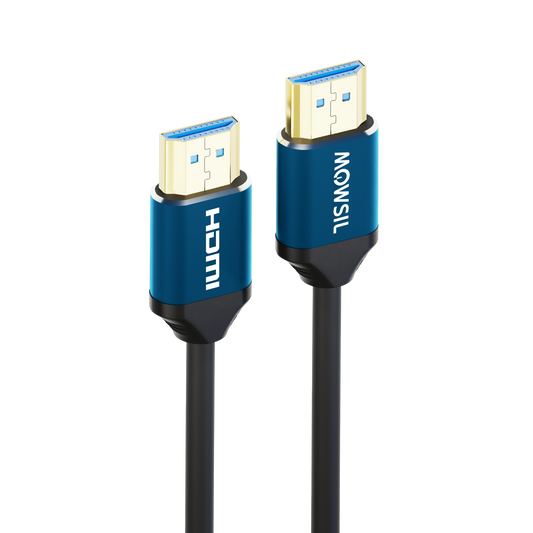
Triple Shielding: To stop interference from your Wi-Fi router or other electronics.
-
Gold-Plated Connectors: These don’t just look fancy; they prevent corrosion and ensure a solid connection for years.
-
Braided Durability: Our cables are designed to be bent and tucked behind tight TV mounts without the internal wires snapping.
A Quick Note on Distance
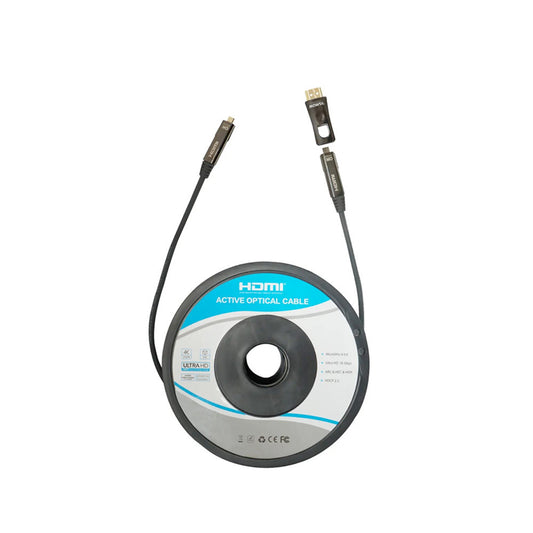
If you need to run a cable a long way—say, from a projector in the ceiling to a receiver across the room—standard copper cables can struggle with HDMI 2.1 speeds. For those long hauls, Mowsil offers Active Optical HDMI Cables (AOC). These use fiber optics to carry the signal, so you get 8K quality even over 30 meters without any loss in speed.
Conclusion
HDMI 2.1 is definitely the way of the future. HDMI 2.0 is still a good choice, for most living rooms. It gets the job done.
If you are a gamer or someone who loves music getting HDMI 2.1 is an idea. It is worth the money you would spend on a pizzas.
Setting up a home theater should be fun. It should not be annoying.
When you pick a Mowsil Ultra High Speed HDMI 2.1 cable you do not have to worry about making a mistake. You’ll know that no matter what new gadget you plug in, your cable is ready to handle it.
Check out the full range of Mowsil connectivity solutions today and get the most out of your screen!